“We believe that the Bible is the word of God, sufficient to sustain and guide our walk with Christ.”
When we mention the Bible, we are talking about a book composed of different works of literature, written by real people over approximately fifteen hundred years, compiled at different times in history, but all guided and ordered by the Holy Spirit.
The Bible is much more than beautiful words or prayers to guide us morally, it is the essence that draws us to know the heart of God. So the Bible does not exist because the church defined or structured it, but it is the Word of God that gives life to the church of Christ.
In this lesson, we immerse ourselves in the Word of God in order to understand and affirm whether the Bible is the sufficient authority for our Christian life.
The Word of God, Origin of Everything
The Word of God is the origin of everything that exists. The Bible teaches us that God created everything by His Word. Since the beginning we see God didn’t need human tools or processes, one word was enough to begin creation.
“Then God said, ‘Let there be light,’ and there was light.” (Genesis 1:3)
With a single word, all things were made and formed. The light emerged where there had been nothing, and what was in disorder was put in order. The Word of God gave rise to everything that we know today as creation.
Later, the Scriptures show us that God created humans in a different way, with a specific purpose.
“Then God said, ‘Let us make human beings in our image, to be like us. They will reign over the fish in the sea, the birds in the sky, the livestock, all the wild animals on the earth, and the small animals that scurry along the ground.’” (Genesis 1:26)
God created man in His image and likeness with the purpose of exercising dominion over the rest of creation. This dominion was not authoritarian or oppressive, but an assignment, a responsibility delegated to care for, administer, and govern what God had created, in full communion with God.
Sin Broke Communion, God Spoke Again
This original plan depended on man living in full communion with God, and thus he could exercise dominion correctly. However, because of the sin of Adam and Eve, this communion was broken. On hearing and following the voice of the serpent, man fell, and this fall produced a separation between God and the human being.
“When the cool evening breezes were blowing, the man and his wife heard the Lord God walking about in the garden. So they hid from the Lord God among the trees.” (Genesis 3:8)
Where before there had been communion, now there was fear. Sin created distance between God and man, exactly as the Scriptures teach that sin always does.
“It’s your sins that have cut you off from God. Because of your sins, he has turned away and will not listen anymore.” (Isaiah 59:2)
For this reason God did not leave man in the condition of separation due to sin. He decided to speak, to reveal Himself, and to approach man again by way of His Word through patriarchs, prophets, judges, and kings, with one single goal, to reconcile man to Himself and restore the original design in the fullness of relationship and communion with God.
“Long ago God spoke many times and in many ways to our ancestors through the prophets. And now in these final days, he has spoken to us through his Son… and he sustains everything by the mighty power of his command…” (Hebrews 1:1–3)
Christ at the Center of Scripture
The New Testament reaffirms this truth by declaring that in the beginning there already existed the Word. Before anything existed, before the creation, before anything was visible, the Word was already there. This shows us that the Word of God does not emerge from history, but precedes it, and that is why it has authority over everything created.
“In the beginning the Word already existed. The Word was with God, and the Word was God. He existed in the beginning with God. God created everything through him, and nothing was created except through him.” (John 1:1–3)
The Word already existed in the beginning and was God. This Word is Jesus Christ, who in the most wonderful work would reconcile men with God. If we look at the Bible from a broader perspective, we can understand that, in essence, it is the voice of God calling man to come back to God, to restore the lost communion, and this call is still in effect today through Jesus Christ.
All of Scripture has a theological coherence and is centered on Christ and His redemptive work. The Bible is Christ-centered, it is not a disorganized group of books, but a revelation with perfect coherence.
“Then Jesus took them through the writings of Moses and all the prophets, explaining from all the Scriptures the things concerning himself.” (Luke 24:27)
“You search the Scriptures because you think they give you eternal live. But the Scriptures point to me!” (John 5:39)
The Bible is not just organized by books or authors, but by a redemptive thread that advances progressively throughout history, revealing God’s eternal plan for humanity. Jesus is the reason the Scriptures exist, the Word itself testifies about, points to, reveals, and affirms Jesus Christ.
In the same way that the Word of God sustains all that is created, it also sustains the church and its walk today, and that is why we affirm that the Scripture is enough to sustain our walk towards Christ.
How Was the Bible Written and Structured?
The Bible was written by people devoted to God, approximately forty authors over about fifteen hundred years. These men, guided by the Holy Spirit, left writings of different genres, history, poetry, and prophecy. Although the authors and contexts were different, there is only one source of revelation.
The Tanakh and “the Scriptures”
For the Jewish people, the Hebrew Bible, known as the Tanakh, is organized into the Law, the Prophets, and the Writings. Within this structure, we distinguish between major and minor prophets, and between pre-exile and post-exile writings.
The twelve Prophets originally formed a single scroll, and in total the Tanakh contains thirty nine works, the same content as the Old Testament, but in a different order.
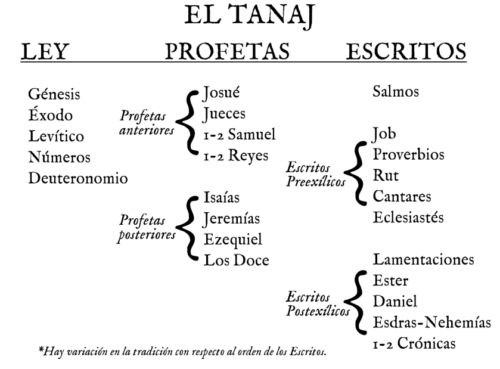
We mention the Tanakh because it is important to understand that the works that make up what Jesus and the apostles referred to as “the Scriptures” corresponded to this set of books. For the Jewish people, there were 24 books, which are equivalent to the 39 books we have today in our Old Testament, since several writings that we count separately they considered as one.
Criteria Recognized in Jesus’ Time
In Jesus’ time, the authority of these writings was widely recognized because they met clear criteria:
- They were inspired by God.
- Their authors were men called and backed by God.
- They affirmed and kept covenant teachings.
- They coherently conveyed the message of God’s reconciliation with humanity.
Under these criteria, other writings of a historical nature or of personal reflections were excluded. So the set of books that we now call the Old Testament was recognized as inspired Scripture.
The Septuagint (LXX)
Later, these texts were translated from Hebrew into Greek, the common language of the time, in what we know as the Septuagint (LXX), a version widely used and cited in the time of Jesus and the apostles. This translation also circulated some historical writings that, although useful, were not considered part of the inspired Word, which over time created confusion about the number of books in the Old Testament.
Our Bible Today: Two Testaments
Our Bible today is organized into two large sections, the Old Testament and the New Testament, which maintain the continuity of God’s revealed message.
Old Testament (39 books)
Pentateuch (5 books): Genesis, Exodus, Leviticus, Numbers, Deuteronomy
Main themes: creation, the fall, covenant and law
History (12 books): Joshua, Judges, Ruth, 1st and 2nd Samuel, 1st and 2nd Kings, 1st and 2nd Chronicles, Ezra, Nehemiah, Esther
Main themes: the development of the people of God in history under His government
Poetry and Wisdom (5 books): Job, Psalms, Proverbs, Ecclesiastes, Song of Solomon
Main themes: wisdom, worship, and the human experience before God
Major and Minor Prophets (17 books): Isaiah, Jeremiah, Lamentations, Ezekiel, Daniel, Hosea, Joel, Amos, Obadiah, Jonah, Micah, Nahum, Habakkuk, Zephaniah, Haggai, Zechariah, Malachi
Main themes: confrontation, call to repentance and Messianic announcement
New Testament (27 books)
Gospels (4 books): Matthew, Mark, Luke, John
Main themes: the life, work, death and resurrection of Jesus Christ
Acts (1 book): Acts (of the Apostles)
Main theme: the expansion of the Church by the Holy Spirit
Epistles (21 books): Romans, 1st and 2nd Corinthians, Galatians, Ephesians, Philippians, Colossians, 1st and 2nd Thessalonians, 1st and 2nd Timothy, Titus, Philemon, Hebrews, James, 1st and 2nd Peter, 1st, 2nd, and 3rd John, Jude
Main themes: apostolic doctrine and the formation of the church
Revelation (1 book): Revelation
Main themes: the consummation of redemptive history and the final rule of Christ
The recognition of these books as inspired by the Holy Spirit, who is God, led to the closure of the biblical canon, affirming the 66 books that make up the Scriptures and establishing that there would be no new written revelations with the same authority.
Over the years the words have changed in the different languages that have been written, but the revealed truths have not changed. And this whole process confirms an essential truth, the Bible was never intended to be interpreted in a literal, rigid sense, but inspired and revealed so that the Holy Spirit would communicate the heart of God to man.
The Result of Examining the Word of God
The Word of God has been preserved through time, languages, and history, to govern our faith and our life.
“All Scripture is inspired by God and is useful to teach us what is true and to make us realize what is wrong in our lives. It corrects us when we are wrong and teaches us to do what is right. God uses it to
prepare and equip his people to do every good work.” 2 Timothy 3:16-17
When the Bible says that all of Scripture is inspired by God and useful, it is not talking about religious
information, but true spiritual formation.
The Word teaches, because first it establishes the truth. It shows us who God is, what we believe and what
we are building our faith on. Without clear teaching, faith becomes emotional, unstable, and easily moved.
The Word also rebukes, because it not only tells us what is right, but confronts what is wrong. It wakes us up,
shows us our errors, exposes corruption in our ways of thinking, beliefs or lifestyles. It is not to embarrass us,
but to get us out of deception.
But God is not alone in pointing out our errors. The Scripture also corrects us. It redirects us, straightens out
what has been twisted and shows us how to get back on the right path. God does not reveal our mistakes to
condemn us but to restore us.
The Word instructs in justice not only for a moment, but for a lifetime. It shapes character, establishes
convictions and teaches us to live according to the will of God day by day. He is not only looking for right
decisions, but for a just life before Him.
And the result is that man of God is perfected through the blood of Christ, to live in the fullness of
communion.
Series: Foundations that Remain
Pastor David Arias